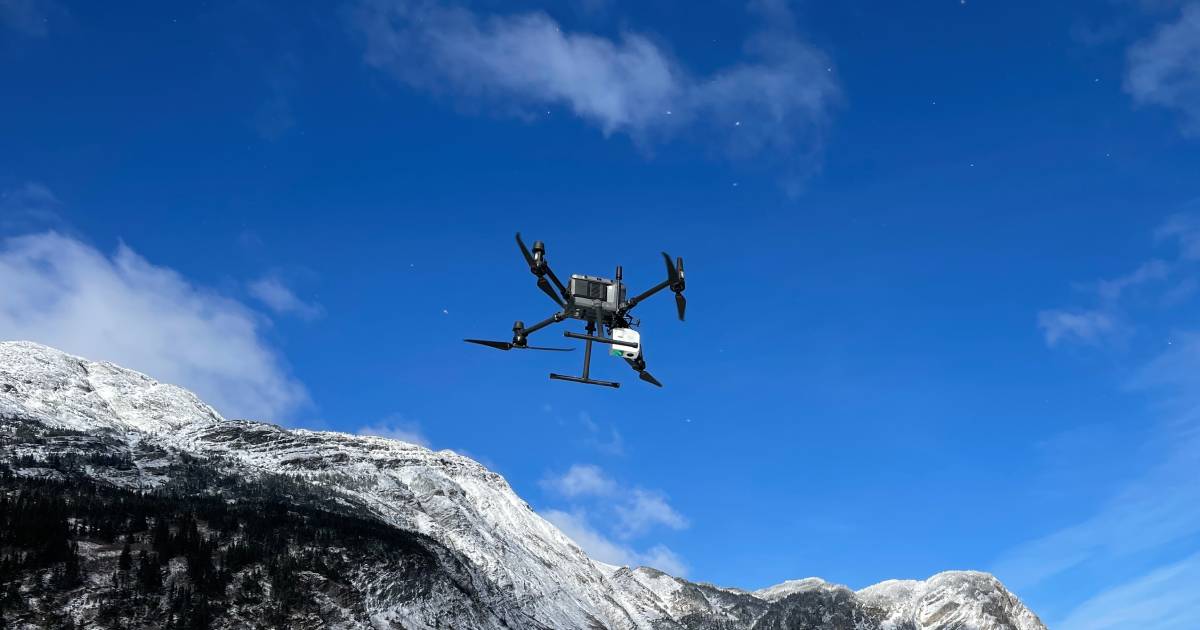
LiDAR has become one of the most powerful technologies in modern surveying, engineering, corridor mapping, and terrain capture. But one thing clients should understand early is this: not all LiDAR services are equal.
Two companies may both say they “have LiDAR,” yet the final results can differ significantly. The reasons are not only the sensor itself, but also the knowledge behind it: how the LiDAR is flown, how the data is processed, and how the final quality is checked and controlled.
A bad LiDAR experience does not mean LiDAR is bad. In many cases, it means the workflow behind the LiDAR was weak.
A Bad LiDAR Result Usually Points to Workflow Problems, Not Technology Failure
If somebody has had poor LiDAR data before, that does not automatically mean LiDAR technology itself is the problem. More often, the issue is one of the following:
- limited understanding of how to use the system properly
- poor flight planning or unsuitable field parameters
- weak trajectory or boresight handling
- inadequate processing and classification workflow
- poor QC/QA and insufficient accuracy evaluation
LiDAR is not a magic button. It is a serious measurement system. Without experience and technical discipline, the final output may look acceptable at first glance while still being noisy, inconsistent, or not suitable for engineering-grade use.
Cheap LiDAR Exists — Good Output Still Does Not Come Automatically
Today, LiDAR systems are becoming more affordable. There are low-level and lower-cost units on the market, and more companies than ever can purchase one. That accessibility has value, but it also creates confusion in the market.
Simply owning a LiDAR does not guarantee strong results. A client should not assume that every LiDAR provider delivers the same quality just because both companies use the word “LiDAR.”
- sensor capability varies greatly
- navigation quality varies greatly
- processing skill varies even more
- time spent learning and testing makes a major difference
What Clients Should Consider Before Ordering LiDAR Services
There are many technical parameters worth considering before ordering LiDAR services. A capable provider should understand how these affect the final deliverable and be able to explain why their system and workflow are appropriate for the project.
1. Point Output Rate
The number of points a LiDAR can produce per second has a direct effect on the potential point cloud density. Higher output can help generate denser data, especially when flying faster, higher, or over broader areas.
- affects overall point cloud density
- influences surface definition and detail
- matters when site conditions require strong coverage
2. Number of Returns
Number of returns is extremely important in dense grass, brush, and canopy. The more returns a system can record from a pulse, the better the chance of penetrating vegetation and reaching the actual ground.
- more returns improve canopy and grass penetration
- better ground detection under vegetation
- important for forestry, corridor, and natural terrain projects
3. Beam Divergence
Beam divergence plays a major role in small-detail quality. The smaller the beam, the less spread occurs on the target, which generally means less noise and better capture of fine features.
- smaller beam = better small-detail definition
- less noise around edges and fine targets
- important for wires, poles, and narrow objects
4. IMU Refresh Rate and Accuracy
A LiDAR sensor is only part of the system. The IMU and navigation solution are critical. A stronger IMU with better accuracy and refresh rate generally helps produce a cleaner and more stable point cloud.
- more accurate point positioning
- less striping and fewer visible slices
- better quality on roads, structures, and linear features
5. Software Used for Processing
The software used to process LiDAR data matters much more than many clients realize. Good raw data can still be damaged by weak processing. Conversely, strong software in skilled hands can greatly improve the final result.
- trajectory processing matters
- boresight handling matters
- classification and cleaning matter
- the workflow must suit the environment and project scope
6. QC/QA Procedures
QC/QA is one of the most important parts of professional LiDAR services. A point cloud should not simply be delivered because it “looks good.” It should be evaluated and controlled properly.
- point cloud accuracy evaluation
- strip consistency checks
- noise review and classification review
- verification that the deliverable meets project expectations
Professional LiDAR is not just data capture. It is data capture, data understanding, and data control.
Why Results Can Differ So Much Between Providers
Even if two companies both say they provide LiDAR services, the final point clouds may differ dramatically. That difference usually comes from the full chain of technical capability:
- sensor level and sensor configuration
- field planning and environment-specific settings
- operator experience
- trajectory and calibration workflow
- software choice and data processing skill
- QC/QA discipline
| Factor | Weak LiDAR Workflow | Strong LiDAR Workflow |
|---|---|---|
| Sensor selection | Chosen for low cost only | ✓ Matched to project requirements |
| Field setup | Generic parameters | ✓ Optimized for environment |
| Processing | Basic export only | ✓ Controlled and refined workflow |
| Ground quality | Inconsistent | ✓ Better vegetation penetration and control |
| QC/QA | Minimal or visual only | ✓ Deliberate evaluation and validation |
Knowledge and Experience Are a Major Part of LiDAR Quality
The best LiDAR results do not come from equipment alone. They come from time spent learning how the technology behaves in different environments and under different conditions.
- open prairie is different from forest
- dense grass behaves differently from bare gravel
- corridor projects demand different priorities than urban detail capture
- different deliverables require different processing decisions
That is why experience matters. A team that has spent time testing and refining its workflow is far more likely to produce reliable data than a team that simply owns a sensor and is still learning at the client’s expense.
How Convex Geomatics Approaches LiDAR
At Convex Geomatics, we use top-quality LiDAR systems and we take the entire workflow seriously. We have spent immense hours flying LiDAR in different environments, processing the data, comparing results, and understanding which parameters produce the strongest output.
- we test in different terrain and vegetation conditions
- we study how settings affect point cloud quality
- we refine processing workflows continuously
- we place strong emphasis on QC/QA and final deliverable quality
We are also still learning — because the technology is developing very fast. Better sensors, better navigation systems, and better software keep changing what is possible. Our goal is to stay at the top of that curve by continuing to learn, implement, and improve.
Our philosophy: owning LiDAR is not enough. Understanding LiDAR, testing it properly, and controlling the output quality is what makes the difference.
The Better Question to Ask a LiDAR Provider
Instead of asking only “Do you have LiDAR?”, clients should ask more useful questions:
- What kind of LiDAR system do you use?
- How many returns can it record?
- How do you process and clean the data?
- How do you evaluate point cloud quality?
- How much time have you spent testing the technology in real environments?
Those questions reveal far more about the likely result than the simple presence of a sensor.
Conclusion
LiDAR is an exceptional technology, but the final result depends on much more than the scanner itself. Sensor quality, point output, number of returns, beam divergence, IMU performance, processing software, and QC/QA all matter — and so does the knowledge of the team using them.
Not all LiDAR services are equal. Not all LiDAR systems are equal. And not all LiDAR results are equal.
At Convex Geomatics, we combine strong LiDAR technology with extensive testing, processing knowledge, and disciplined quality control to provide dependable, high-level results for our clients.
Need LiDAR Data You Can Actually Trust?
Talk to Convex Geomatics about your project. We use high-quality LiDAR systems, strong workflows, and disciplined QC/QA to deliver dependable results for engineering, corridor, topographic, and terrain mapping projects.
Related Reading from Our Blog
- LiDAR vs. Photogrammetry in Alberta's Mixed Terrain: When Each Method Wins — LiDAR vs photogrammetry in Alberta
- LiDAR in Forestry and Dense Vegetation: What Actually Works — LiDAR forestry deliverables
- High Accuracy Surveying in Construction: When Millimeters Matter — high-accuracy survey workflows