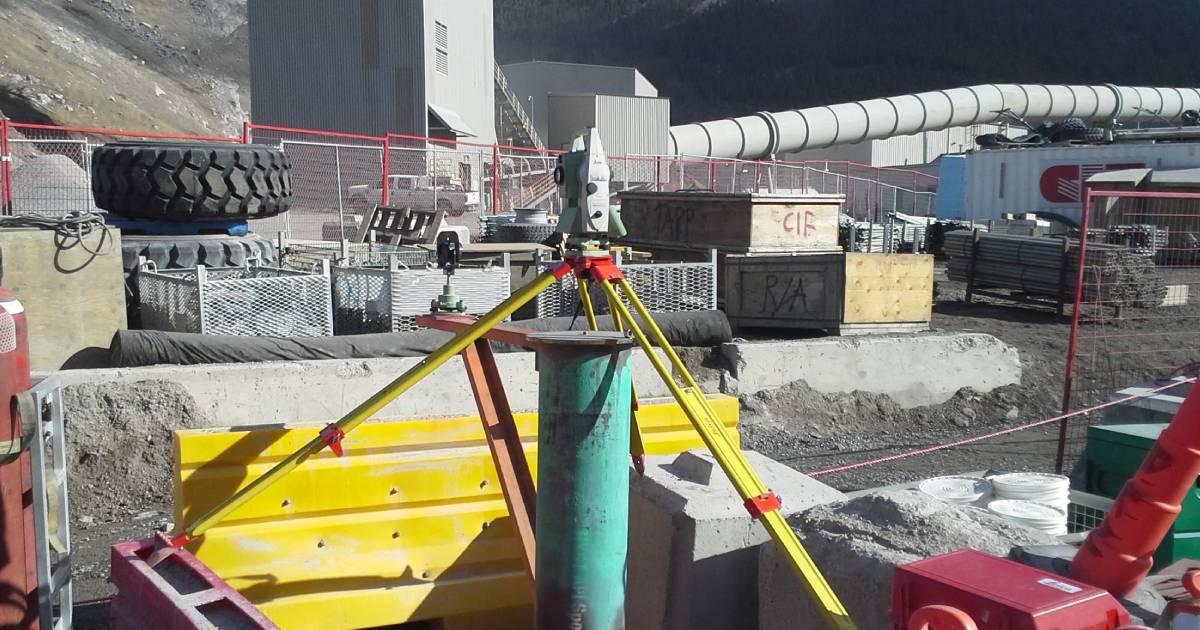
In construction surveying, a millimeter is not a small number. On the right project, it can be the difference between a clean installation and expensive rework. Structural steel, anchor bolts, embedded items, machine rails, equipment pads, and high-spec concrete work all depend on precise layout and dependable control.
Yet one of the most common misconceptions in the market is that survey equipment is all basically the same. It is not. Total stations vary greatly in accuracy class, prisms vary in quality and precision, tribrachs and adapters introduce their own tolerances, and poorly established control can undermine every layout point that follows.
Construction reality: a small error at the control stage does not stay small. It propagates through layout, verification, and installation until somebody has to absorb the cost.
Not All Survey Equipment Is Equal
It is easy to talk about “a total station” as if it were one standard category, but total stations are available in multiple angular accuracy classes. Those differences exist for a reason: different work demands different precision.
- 0.5" total stations are used where very high precision is required
- 1" instruments are commonly suited to high-accuracy construction layout
- 2" instruments are often appropriate for general construction work
- 3", 5", and 7" instruments may be acceptable for lower-precision tasks, but not for every application
A contractor does not need the same instrument class for rough civil layout as for critical equipment positioning or structural alignment. The important point is not that one class is always “best,” but that the survey firm should be using the right class for the specific task.
Why Millimeters Can Play a Big Role
On some projects, a few millimeters may seem insignificant until tolerances begin stacking. Once that happens, issues become very real:
- Base plates no longer align cleanly with anchor bolts
- Embedded items are offset from design position
- Prefabricated components arrive and do not fit as intended
- Successive layout stages amplify earlier control or instrument errors
The problem is rarely one dramatic mistake. More often, it is the accumulation of small inaccuracies from equipment, field procedures, control, and accessories.
Important: high-accuracy layout is not just about the instrument spec sheet. It is about the full measurement chain: control, centering, target quality, field procedures, and verification.
Understanding Total Station Accuracy Classes
Contractors should understand that total station accuracy is not a marketing number. It directly affects how well an instrument can support certain types of work.
0.5" and 1" Instruments
- Suitable for high-precision layout and monitoring applications
- Used where tighter tolerances must be respected
- More appropriate for critical alignment tasks
2" Instruments
- Often suitable for strong general construction layout
- A practical choice for many site tasks
- May not be the right choice for the most demanding precision work
3", 5", and 7" Instruments
- Can be adequate for lower-precision tasks
- Should not be assumed suitable for millimeter-sensitive construction
- Need to be matched carefully to project tolerance requirements
| Total Station Class | Typical Use Level | Construction Suitability |
|---|---|---|
| 0.5" | Very high precision | ✓ Critical layout and monitoring |
| 1" | High precision | ✓ Precision construction layout |
| 2" | General high-quality layout | ✓ Many construction tasks |
| 3"–5" | Lower precision general work | Task-dependent |
| 7" | Basic positioning | Not for critical millimeter work |
Prisms Are Not All the Same Either
Many people focus on the instrument and overlook the prism. That is a mistake. Prism quality, manufacturing precision, and suitability for the task all influence final accuracy.
- Different prisms have different centering and alignment quality
- Some are designed for precision work, others for general use
- Poor-quality prisms can introduce systematic error into otherwise careful layout
A high-end total station paired with the wrong prism is not delivering high-end results. The system has to be treated as a system.
Key point: precision layout requires the right instrument, the right prism, and the right field practice working together.
Tribrachs and Prism Adapters Matter Too
Tribrachs and prism adapters are often treated as minor accessories. In precision construction surveying, they are not minor.
- Tribrach quality affects centering repeatability
- Adapters vary in build quality and precision
- Wear, damage, and poor fit can quietly reduce accuracy
That means the question is not only whether the instrument is high accuracy, but whether the entire setup preserves that accuracy in real field conditions.
Control Is the Foundation of the Construction Site
One of the most important questions a general contractor can ask any survey firm is:
“What class of accuracy control are you going to establish for this project?”
That question matters because control is the reference framework for the entire construction site. If control is weak, unstable, poorly checked, or established without appropriate methodology, then every layout point based on it is vulnerable.
- Site control should be established intentionally, not casually
- Its class and method should suit the project tolerances
- Control should be verified, protected, and used properly throughout the work
There are different ways to establish control depending on the project, but the principle remains the same: the quality of the control network governs the quality of everything that follows.
GPS Control Must Follow Standards, Specifications, and Guidelines
Construction control is not just about placing a few convenient points and calling it done. There are standards, specifications, and guidelines for GPS surveys, and they exist to ensure accuracy, repeatability, and defensible results.
- Survey methods should be selected to achieve the required control class
- Observations should be planned and executed properly
- Quality checks and validation should be part of the workflow
- The control network should support the project, not simply exist on paper
Convex Geomatics follows accepted survey standards and sound control practices to provide the most accurate and dependable results possible for construction projects.
What Contractors Should Ask a Survey Firm
Contractors do not need to become survey specialists, but they should know how to ask the right questions.
- What class of site control will you establish?
- What instrument accuracy class will you use for this scope?
- Are your prisms and accessories suited to high-accuracy work?
- How will you verify and maintain the control during construction?
- How do your procedures align with applicable survey standards?
A strong firm will answer those questions clearly. A weak firm will usually speak in generalities.
Why Convex Geomatics
Convex Geomatics approaches construction surveying with the understanding that precision is not an abstract concept. It has direct consequences in the field, in schedules, in fit-up, and in cost.
- We use equipment appropriate to the required task accuracy
- We pay attention to the full measurement chain, not only the instrument body
- We establish and use control with the seriousness construction projects demand
- We follow standards, specifications, and sound GPS survey practice
That approach quietly separates high-accuracy surveying from lower-end work. It is not about using impressive language. It is about delivering layout and control that stand up when the tolerances matter.
Need Construction Surveying Where Accuracy Really Matters?
Convex Geomatics provides precision-focused construction surveying, high-quality control establishment, and field procedures designed for projects where millimeters can play a major role.
Related Reading from Our Blog
- Not All LiDAR Services Are Equal — not all survey services are equal
- Digital Twins and Gaussian Splats: Faster, Richer 3D Reality Capture — digital twins for construction
- Stockpile Volumetrics: Comparing UAV LiDAR, Photogrammetry & Traditional GPS — volumetric methods comparison